

Lethal Minds Volume 31
Volume 31, 01 FEBRUARY, 2025
Letter from the Editor
When I agreed to volunteer a few hours a month for the Lethal Minds Journal back in 2022, I never expected to have a regular role on the staff. But here I am.
When I agreed to a regular role as an “advisor,” I certainly did not imagine being the Editor in Chief for going on three years. But here I am.
When I agreed to be the Editor in Chief, I didn’t plan on being the decision maker. There were plenty of other folks who founded this thing, and I figured their passion would keep driving the ship. But here I am.
That’s kind of how it goes in volunteering. Those who will, do.
A few days after writing this, I will go feed homeless veterans because a friend asked me to. A few days after you read this, I will start volunteering at an adult literacy center because I cannot imagine not being able to read, and after years of trying to overcome intractable problems abroad, I am refocusing on solvable issues at home.
I wish it all came to me easily. I wish I was genuinely selfless and could tell you I’m not going to gripe about it when I suddenly find, as I always do, that I’ve overcommitted. But I can’t. I’m as flawed and grouchy and stressed as anyone else. Likely more so. But I also know that as soon as I stop pondering and start acting, just like in a firefight, all the bullshit will fall away, and I will be blessed with nothing but mission focus and the feeling of making things that need to happen, happen.
Last month, I wrote about the criticality of Veteran Service Organizations to our community. But there are countless ways veterans can continue serving, and frankly, helping one person to read sounds like a clearer victory to me than twenty years of fighting wars against ephemeral enemies for unclear objectives. Call me selfishly unselfish, but I like the idea of a tangible effect for a change.
One way you can have an impact is by submitting your thoughts to Lethal Minds Journal (or joining our volunteer staff that pulls this all together every month). Aside from the flagship Lethal Minds Journal, our team offers sharp analysis via Bulletins From the Borderlands and serialized fiction offerings and interviews with new and established authors via our growing standalone series. Our Managing Editor, Jill Bosserdet, has a host of good ideas coming in 2025.
Join us.
We want your thoughts, opinions, and creativity. Submit them to lethalmindsjournal.submissions@gmail.com.
Fire for Effect,
Russell Worth Parker
Editor in Chief - Lethal Minds Journal
Dedicated to those who serve, those who have served, and those who paid the final price for their country.
Lethal Minds is a military veteran and service member magazine,
dedicated to publishing work from the military and veteran communities.
Two Grunts Inc. is proud to sponsor Lethal Minds Journal and all
of their publications and endeavors. Like our name says we share a
similar background to the people behind the Lethal Minds Journal, and
to the many, many contributors.

Just as possessing the requisite knowledge is crucial for success,
equipping oneself with the appropriate tools is equally imperative. At
Two Grunts Inc., we are committed to providing the necessary tools to
excel in any situation that may arise.

Our motto, “Purpose-Built Work Guns. Rifles made to last,” reflects
our dedication to quality and longevity. With meticulous attention to
manufacturing and stringent quality control measures, we ensure that
each part upholds our standards from inception to the final rifle
assembly.

Whether you seek something for occasional training or professional
deployment, our rifles cater to individuals serious about their
equipment. We’re committed to supporting The Lethal Minds Journal and
its readers, so if you’re interested in purchasing one of our products
let us know you’re a LMJ reader and we’ll get you squared away.

Stay informed. Stay deadly.

-Matt Patruno
USMC, 0311 (OIF)
twogruntsinc.com
support@twogruntsinc.com
In This Issue
The World Today
Swiss Neutrality in the Digital Battlespace
The Written Word
The Fool
On Suicide
Grampie Already Told Me
Febtoberfest
Poetry and Art
Things I (We) Carry
Painted From a Memory
Transition and Veteran Resources
Operation Motorsport
Warrior Rising Part 2
Heath and Fitness
Training for Special Operations Selection, Part 2: Mental
The World Today
In depth analysis and journalism to educate the warfighter on the most important issues around the world today.
Switzerland's Neutrality in the Digital Battlespace: Challenges in an Interconnected World
Jonas Frey
In an era where the digital realm dictates power dynamics and conflict, Switzerland’s long-standing commitment to neutrality faces unprecedented challenges. For centuries, Switzerland has stood as a symbol of peace and impartiality, grounded in its constitutional principles. Yet, as cyber warfare continues to evolve—operating without borders, uniforms, or even clear rules—questions arise about whether neutrality can hold steady in a world where war no longer resembles traditional battlefields.
Switzerland now confronts a digital dilemma: how to preserve its neutrality while addressing the increasingly complex realities of modern conflict. This means reinterpreting the Law of Armed Conflict (LOAC), redefining combatant status in cyberspace, and deciding when a cyberattack constitutes an act of war. These are not abstract legal debates; they strike at the heart of Swiss policy and its role on the international stage.
Neutrality Meets the Digital Age
Switzerland’s neutrality, deeply rooted in its Federal Constitution and international law, is not just a political stance but a way of life. For over two centuries, neutrality has allowed the country to avoid involvement in armed conflicts while serving as a trusted mediator. The 1907 Hague Conventions codified this neutrality, mandating that Switzerland abstain from military alliances and ensure its territory is not used for conflict.
But cyberspace complicates these rules. Unlike physical borders, the digital domain is borderless and decentralized. Swiss networks can unknowingly host malicious cyber operations, such as state-sponsored attacks or the activities of independent hackers. This raises a fundamental question: how can Switzerland ensure its infrastructure is not misused in conflicts while adhering to its neutral principles?
The issue of digital sovereignty lies at the heart of this challenge. Switzerland has championed the idea that states must respect each other’s digital domains, much like physical territory. Yet, the rapid pace of technological change makes enforcing this principle a daunting task. As cyberattacks grow in complexity and scale, neutrality in the digital age is no longer a given—it must be actively maintained.
Combatants Without Uniforms: The Cyber Warfare Grey Zone
In traditional warfare, the distinction between combatants and civilians is straightforward. Soldiers wear uniforms and operate under the command of a state, while civilians are protected under International Humanitarian Law (IHL). However, cyber warfare throws these distinctions into chaos. Hackers and cyber operatives don’t wear uniforms. They might work for governments, private companies, or even act independently.
This ambiguity creates a problem for Switzerland, a country committed to staying out of conflicts. Under IHL, civilians who engage in hostile actions—such as launching a cyberattack—lose their protected status for the duration of their involvement. But how can a neutral state prevent its citizens from unknowingly participating in global cyber conflicts? And how can the Swiss government ensure these actions don’t drag the country into a war it wants no part of?
For example, a Swiss-based hacker targeting critical infrastructure in another country could be perceived as a belligerent act, even if the state itself had no involvement. This highlights the need for clear domestic policies to regulate the use of cyberspace while avoiding overreach. It’s a delicate balancing act, and one that Switzerland must navigate carefully.
When Does a Cyberattack Become an Act of War?
Perhaps the most difficult question in the digital battlespace is determining when a cyber operation constitutes an act of war. In conventional terms, an act of war involves visible and deliberate aggression—think invading armies or bombed cities. In cyberspace, the criteria are less clear. A cyberattack can be devastating, yet invisible, causing widespread disruption without a single shot being fired.
Switzerland has acknowledged that certain cyberattacks, such as those causing significant physical destruction or loss of life, could qualify as acts of war under international law. However, cyber operations often fall into a grey area. For example, what about attacks on financial systems, which can cripple economies but don’t result in physical harm? Or ransomware attacks targeting hospitals, where the damage is indirect but potentially life-threatening?
Complicating matters further is the issue of attribution. In cyberspace, attackers can easily disguise their identities, making it difficult to determine who is responsible. Without clear attribution, responding to an attack—whether diplomatically or legally—becomes nearly impossible. For neutral states like Switzerland, the inability to identify aggressors poses a serious threat to its ability to remain impartial.
Resilience Through Collaboration
While Switzerland is committed to neutrality, it recognizes that resilience in the digital age cannot be achieved in isolation. In 2024, the country took a significant step by joining the European Cyber Security Organization (ECSO). This move reflects a pragmatic approach: strengthening its defenses through collaboration without compromising its independence.
Switzerland has also enhanced its domestic cybersecurity capabilities. The Federal Intelligence Service now plays a key role in identifying and countering cyber threats, focusing on prevention rather than retaliation. Unlike some countries that have developed offensive cyber capabilities, Switzerland has chosen a defensive strategy consistent with its broader commitment to peace and diplomacy.
However, collaboration raises questions about the limits of neutrality. Partnerships with international organizations or private companies could be perceived as aligning with certain geopolitical blocs, potentially undermining Switzerland’s impartial stance. Balancing these relationships while maintaining its neutrality requires not only technical expertise but also diplomatic finesse.
A Blueprint for Neutrality in the Digital Era
Switzerland’s challenges in cyberspace are not unique, and its approach offers valuable lessons for other nations. By emphasizing international law, transparency, and multilateralism, Switzerland has positioned itself as a leader in shaping the rules of digital conflict. Its advocacy for applying existing international laws to cyberspace reflects a belief that the principles governing physical warfare are just as relevant in the digital realm.
At the United Nations, Switzerland has called for clearer norms and accountability in cyberspace, such as requiring states to disclose their use of cyber weapons. These initiatives aim to build trust in a domain often characterized by secrecy and mistrust. For Switzerland, the goal is not only to protect its own neutrality but to promote a more stable and predictable global order.
Upholding Neutrality in a Connected World
As cyber operations become more central to modern conflicts, Switzerland’s neutrality faces its greatest test yet. Preserving impartiality in a domain without borders or clear rules requires innovation, resilience, and unwavering commitment to core principles.
Switzerland’s ability to adapt its neutrality to the realities of the digital age will determine its relevance as a global mediator and bastion of peace. By advocating for the rule of law, investing in cybersecurity, and fostering international cooperation, Switzerland is charting a path forward—not just for itself, but for all neutral states navigating this uncharted territory.
The stakes are undeniably high, but Switzerland’s history of navigating complex geopolitical challenges suggests it is well-equipped to meet the demands of this new era. In the digital battlespace, as in the physical world, Switzerland remains a beacon of stability in an increasingly uncertain world.
The Written Word
Fiction and Nonfiction written by servicemen and veterans.
The Fool
Jason Wang
“Do not have evil-doers for friends, do not have low people for friends: have virtuous people for friends, have for friends the best of men.”
Congratulations on your reading comprehension, behavioral psychology, and sustained ability to triage near-term threats. As you read, relax, and recharge, be at peace knowing that our English-speaking society has somewhat evolved, and you are unlikely to be hunted by a feral animal over the holidays; yet such a threat is never zero – some 500 people per year die to hippos every year. Remember this when you find yourself doom scrolling, snacking on Ugali in Nairobi, otherwise, stretch, meditate, journal, and enjoy a refreshing beverage.
A more practical risk assessment probably involves some mix of a DUI, fiscal irresponsibility, and lackadaisical training habits that could land even the most regimented warrior in a sluggish spot. These hazards may sound familiar if you choose to surround yourself with people who would find themselves facing these predicaments. Consider why these issues are present in your bandwidth at all – if you truly cannot control your actions, or consumption, or behavior, then it is time to seek help. If you can, then reflect on this, why the fuck are you doing dumb shit?
Go ahead and create your own space; self-reflection is a terribly intimidating task. Do you do dumb shit? Will you continue to? Sure, you can post about it, hashtag meditation and decompression, but if you find yourself immediately scrolling, or needing music, or itching for some background noise, then you probably feel the anxiety that so many of us have grown accustomed to. Behaviors that respond to this feeling aren’t particularly clear – hence the repetitive nature of negative activities. In this hyper-stimulating world, there always seems to be something else to do, something to engage in. I highlight here that the art of un-doing is important.
Start slow; no phones in the bedroom, upon awakening or before sleep, no screens or music when you stretch, give yourself a few iterations to get your mind and body acquainted. Allow your mind to wander and explore – you’ll find it generates clarity at an alarming rate, usually in some form of: “I feel something in my body, I should do something, or I should do less of something else.” Low-threshold physical activity is a great place to calibrate the mind – a few minutes longer in the shower (not the one right before the workday), a few minutes longer cleaning the room, when you are washing the dishes. Lay in bed for a bit longer before your planned “sleep” time. Ask yourself – what was the last meaningful thing you thought of yourself? I doubt it came from the last three hours of scrolling, or the nightcap at the same bar from every other Saturday night.
This isn’t just chronic inflammation or latent regret – lean into your own mindful wisdom, and you will find simple questions make tempest waves. Describe yourself in three words; describe your partner in three words. Are you happy? What do you want to do differently tomorrow? It’s not just the brief flash of life’s psychedelic trips – it’s the steady steps after that enable improvement; why are you doing what you do now, and why will you do what you do later? You have a team to discuss this with – how will you lead yourself, and where are you marching towards?
We learn and train, and while we won’t win every fight, our war is always won, on your terms or another’s; liberty serves a cyclic season of ups and downs. Don’t find yourself wading through molasses looking for someone else’s retribution. If your friends are being shitty, be accountable and call them out. If you are being shitty, fix yourself. The reward is the reflective night alone, the silence in an early training session, the brief encounter with another believer – find peace in your solitude, so that you may share such a love with those that you care for. Enjoy and acknowledge your foolish tendencies, but don’t stay the fool; find your intelligence, find your wisdom, and do.
“The fool who knows his foolishness, is wise at least so far. But a fool who thinks himself as wise, he is called a fool indeed.
If a fool be associated with a wise man even all his life, he will perceive the truth as little as a spoon perceives the taste of soup.
If an intelligent man be associated for one minute only with a wise man, he will soon perceive the truth, as the tongue perceives the taste of soup.
Fools of poor understanding have themselves for their greatest enemies, for they do evil deeds which bear bitter fruits.
That deed is not well done of which a man must repent, and the reward of which he receives crying and with a tearful face.”
On Suicide
Frank Gonzales
I didn’t know about Jon’s death until a few weeks ago. I’d been off Facebook for a few years, and had lost touch with a lot of people.
I met Jonathan Delgado in the summer of 2013, in Camp Pendleton, California. Both newly minted Marines, we began infantry training together, and were both selected to be 0311s. Then, Jon was selected to be a marcher in Washington, D.C. I already had orders there, for duty in the White House Military Office. My path was longer though, and I had every intent of running off of it.
But I did not have the guts to derail the plans of the Corps by getting a DUI or knocking up the first girl I met, so I arrived, disgruntled and abrasive, in our nation’s capital. This may be something most people cannot comprehend, but when you are in an organization with values that revolve around fighting and winning wars, and it’s currently at war, duty on the home front does not sound appealing. I quickly earned the reputation of a kid with an attitude problem, and did everything to prove that assumption correct.
One day, I saw Jon. He was putting the new members of his marching platoon through remedial exercises in the subterranean parking garage that housed our armory, and provided a training ground that was more permissive because it was away from the eyes of officers and staff. He recognized me and embraced me like I was his kin. He made all his juniors come up and stand at parade rest to greet me.
While he had the lax hours of a marcher, I was doing 12-hour shifts six days a week while awaiting my TS/SCI clearance. He would often catch me on post as he was coming back from the bars at two in the morning, stopping to chat with me for an hour just to pass my time, or order a pizza for us to split. My interactions with him were marked with kindness, some of the first I had seen anyone display in the Corps.
I got my clearance and moved to a new assignment inside WHMO. At some point he got orders to 1/7. I would meet him in 29 Palms.
I am not sure what he had dealt with at that point, other than going to CENTCOM, as Seventh Marines was the only Marine Corps regiment assigned solely to that region. I had returned from 2/7 Easy Company’s deployment to Afghanistan and met with someone who seemed less happy and upbeat.
I got out. He got out. We lost touch. Endured trials. Then at some point, he took his life and I didn’t know until three years later. At that time I was just getting out of the darkest time in my own life.
I wish he had known. I wish he had known that he could call. I wish he had known that when I was an angry young man, he was a good friend. I wish he had known that one mistake does not make an entire life bad. But I would be lying if I said I always knew that, too.
It’s several years late, but I love you, Jon. You’re missed. I hope to see you one day and the others gone too soon. In Valhalla, tall and strong, free from fears and burdens of the mortal realm.
This year, I dealt with a lot. In the midst of it all, I lost my way and my why, for more than a moment. I lost hope several times. On one occasion, I said a goodbye message. Several people in the community waved the red flag and got someone’s attention. I talked my way out of it to keep my job. It woke me up a bit to what I was doing. The people who reached out showed me they cared.
Later, what one of them said hit me like a hook from Tyson. He said that if there was anyone he didn’t think would take that leap, it was me. I was one of the strongest people he knew. So if it had been true, he didn’t know what to do. I didn’t know what to say, because I had not viewed myself the way this man did for some time.
And that is when it hit me: for all of us, there is someone who views us this way; someone who looks at us as stronger than themselves; who is inspired by simply knowing you and that you are in this world. Don’t believe me? Look at how your dog acts when you get home. You’re a god to that animal, and he’s excited to see you every day. Imagine if he were to lose you, how he would feel, what that would do to him or the other people in your life.
When you take your own life, you leave a void in the lives of all those who knew you. Even your enemies, in death, will claim that they always thought the best of you. The world is a little darker without you in it. Think of the light you bring to someone the next time you consider that option.
I would be lying if I said that, in the difficult months that followed that day, I didn’t consider it again. But I always thought back to that conversation. And I thought of how I felt when Jon, or Shawn, or Peter, or any of the others I know left on their own terms. Of the hurt I felt. And so I pressed on one more day. And then that day was shit, so I pressed on again.
Eventually I found that the hard times would end. And when they were done, I was left standing. And I was stronger for all of it. I had more compassion, I was more reliable, I had more to give my friends and family. I was the man my friend had remembered, and then some.
I have given this talk to people in the community and still felt hopeless myself, but now more than ever I feel it needs to be heard and I hope it resonates with this perspective. Tough times don’t last. Eventually they will end. But if you quit the ruck in the valley, you will never see the beauty that hides behind the next peak. And what’s worse, the people marching behind you will lose some hope too. You deprive the people who look to you for light of any more you could shine on them.
Don’t give in. You’re stronger than you think you are. I know you are, because you inspire me with the courage you have to go on living. Do it one more day with me.
Grampie Already Told Me
Eric Chandler
The fog lifted as I looked across the Rhine River. Behind me stood the remnants of the Ludendorff Bridge that used to cross the river there. Two towers that looked like part of a castle; all that was left of the famous bridge at Remagen. It somehow escaped demolition as the Germans retreated east during World War II. Grampie told my dad that he crossed that bridge. It must’ve been pretty soon after US troops captured it because it collapsed ten days later.

Four service buddies stood there with me. We were in Germany for a couple of weeks of training in February 2011. I talked them into joining my pilgrimage. We also drove to Kesternich that morning. Captain Raymond Jackson (Grampie), and the 78th Infantry Division entered the line in early December of 1944, just before the Battle of the Bulge. Grampie was the S3 or the Plans and Training Officer. He helped plan the assault on Kesternich to retake the town after the Battle of the Bulge. His unit, the 2nd Battalion of the 311th Infantry Regiment, was responsible for the assault down the main street of the village. We drove down the same street. I tried to imagine troops fighting house to house in the snow. Grampie got a battlefield promotion to major after Kesternich. Later, his infantry regiment was the first to cross the bridge at Remagen. I felt satisfied standing by the Rhine that day. It took me several years of research to figure out where he had been.
I first started looking into his military past when Grammie, Bertha, died in 2005, right before my first deployment to Iraq. I made a quick trip to Maine for her funeral. I discovered she used a letter as a bookmark in her Bible–a letter from Grampie, who passed away sixteen years earlier. He wrote it to her while he was fighting in the Battle of the Bulge. That letter must’ve meant a lot to her.
The 78th Lightning Division used to publish a newsletter. When Grammie died, I inherited some of them. I found references to Grampie. My dad sent me a division history book in 2008. I found a pamphlet on the internet created by his infantry division just after the war. Five years after Grammie died, I had gathered enough information that I knew I could follow Grampie’s footsteps through Germany.
I was pretty proud of myself. I figured out Grampie’s history without ever hearing it from him. I had regretted never looking into his military service until after he died. I never asked him about his time in World War II. “Jamais Trop Tard” was the motto of his infantry regiment. It translates as “Never Too Late.” Ironic, really. It was too late for me to ask Grampie any questions. Even so, I pieced together his story so I could follow in his footsteps.
Grampie died in 1989, just three days before I was commissioned as a second lieutenant in the US Air Force. He was going to pin on my gold bars. It was going to be a big deal for me because of his military background. But way back then, I only had some vague idea that he was in the Battle of the Bulge. Not even his death was enough to make me curious. It took Grammie’s passing and my own deployment to war sixteen years later to pop my selfish bubble.
I felt some redemption as I stood by the Rhine thinking about Grampie’s journey. I took a lesson from that tour through Germany: Curiosity is good. Would I have learned Grampie’s history without it?
Recently, curiosity came after me again. Often, it is as quiet as a whispered question, an idea so fragile it could be erased forever because the doorbell rings. When I hear curiosity whisper, I write it down. I’ve learned to follow those faint ideas. They led me to Grampie’s unspoken history. I knew this would take me somewhere important, too.
In this case, it was my dad's work that inspired my curiosity. He looked into the final resting place of Judah Chandler and his son, John. Judah participated in the first naval battle of the Revolutionary War. His son John died in the Revolutionary War. My dad figured out where they were buried and so we visited their cemetery in November 2022. Two years later while looking at pictures of John’s gravestone, curiosity kept guiding me, whispering, “What exactly did John do during the Revolutionary War?
Just like when I mapped out Grampie’s footsteps through Germany, my interest was piqued again. Curiosity and caffeine fueled my deep dive into the internet and a family member’s research from 1910 to find the answer. I learned that John enlisted in the Continental Army and fought at the Battle of Saratoga. I needed to know more. I wanted to look at some maps of the battle. One of my most prized possessions is a two-volume set of books that I inherited from my great aunt: The West Point Atlas of American Wars. I reached up onto the shelf and pulled down the set of books. Without looking, I grabbed one of the volumes and opened it. I accidentally grabbed the volume with more modern wars.
The book opened to the Battle of the Bulge, where I saw something stuck in the pages. It was an envelope addressed to me dated April 1981. It was from Grampie. I opened it and saw Grampie’s handwriting, “You trapped me, didn’t you.” He proceeded to write four pages about exactly what he did in World War II. I must’ve asked him some questions when I was a kid. In that letter, he told me all the things I figured out later on my own.
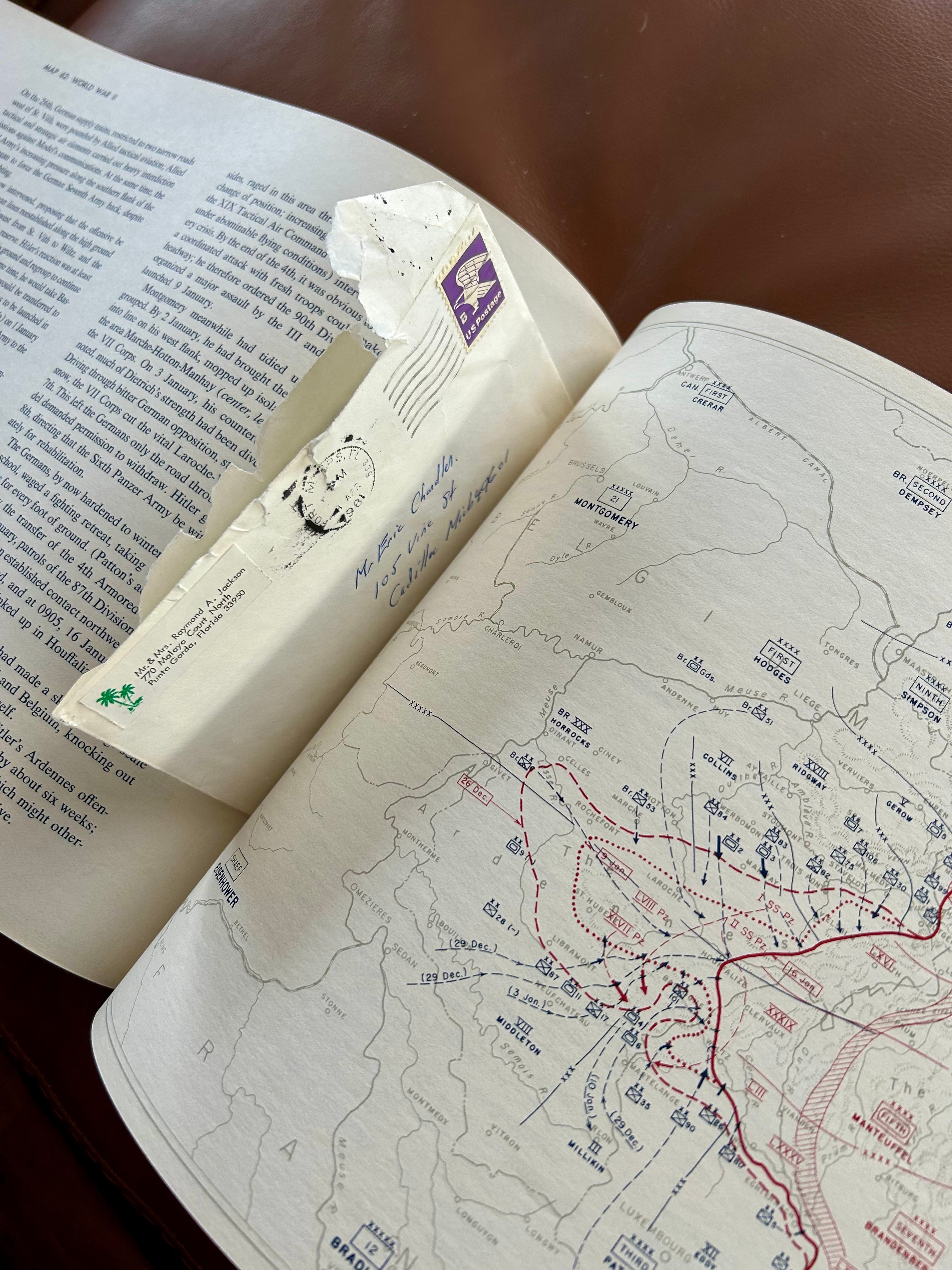
Then he told me things I didn’t know. He said he crossed the bridge at Remagen the 2nd day after it was captured. He wrote, “Now I’m going to toot my own horn.” He said he got two Bronze Stars and the Combat Infantry Badge, among other decorations. He signed off by saying, “I’m tired, Grampie.”
My curiosity was rewarded tenfold. I was driven to find answers I thought I’d never truly know. And then because I continued to listen to that quiet calling of curiosity, a rare family heirloom tumbled out of a book I hadn’t meant to open. Even as a 13-year-old kid, I knew that letter was important. Later, when I inherited the West Point Atlas, I cared enough to tuck it next to the Battle of the Bulge. Curiosity led me back to that letter over 40 years later.
This discovery was important for reasons beyond holding Grampie’s letter in my hands again after so much time has passed. First, I have a terrible memory. I had Grampie’s answers 24 years before I started poking around. I asked him in 8th grade and he told me–in great detail. I just forgot.
Second, I was wrong. I was wrong when I said that Grampie never told me what he did. I stood on the banks of the Rhine in 2011, proud of my research when Grampie had already told me everything thirty years earlier. He told me before I was in high school. He told me eight years before he died. I could’ve asked him more questions. I wasn’t paying enough attention. It happens when you’re young. We don’t know how important those stories are until the time to ask for them is long gone. Follow that curious whisper. Ask the questions. Listen to the stories.
We should remember to keep listening to the call. My mom recently gave me a box of Grampie’s papers. I skimmed them quickly, but I need to take a closer look. Something might be tucked into one of the pages. Like Grampie’s letter in Grammie’s Bible. Like Grampie’s letter in my West Point Atlas. Something might be tucked into the folds of your brain that you forgot. You never know until you let curiosity take the lead.
Febtoberfest
Ron Jansen
Febtoberfest Celebration
February 2, 2007, at 1800 hours
Cocktail hour to be followed by the airing of grievances
Bring a dish to pass
There was little to celebrate in those days. Casualty reports from across the battalion trickled steadily to our small forward operating base like a leak down the wall of a tent. We didn’t always know the injured or killed, but their names and ranks were similar enough to our own that news of their injuries and deaths weighed on us. Our platoon mate, Jacob Neal, was killed just two weeks before at a spot in the road we had passed dozens of times without incident. He wasn’t a good friend of mine, but I knew him well enough to know I wish he had been.
To shake off the gloom, we spawned the idea of a Febtoberfest celebration. Similar to the “Festivus” celebration that George Costanza's family celebrated on the TV show Seinfeld, Febtoberfest was simply a reason to celebrate something — anything really. I posted a notice on the dry-erase board that I used to inform the squad of upcoming patrols.
As February approached, we snuck a few extra cases of Coors Non-Alcoholic beer and Rip-Its energy drinks from the company FOB down the road. Each member of the squad brought whatever they had from the various care packages they had received. Wortman brought candy bars—he always had a huge box replenished by family and friends back home. Thomas provided several bags of Doritos, and others brought summer sausage, Little Debbie snack cakes, beef jerky, or anything they had. We arranged everything on a small wooden table in our room at FOB Gold and broke bread, and Doritos, together.
It was a meager celebration by most standards. As we passed around the warm, non-alcoholic beers, we made mocking toasts to the glorious insurgency, the visionary defense department, and the chow hall champions keeping us safe from fighting a war without fresh haircuts and shaves or walking around with white socks under our combat boots.
We had to dodge the attention of those idiots any time we stopped for resupply at Camp Fallujah or Al Taqaddum Air Base. They homed in on uniform or grooming violations like a shark after a bleeding seal. We ran a gauntlet from the moment we got out of the Humvees and walked toward the PX or chow hall.
“Where’s your cover, Marine?!”
“Sorry, Gunny. I’ve only worn a helmet since I’ve been here. The others don’t stop bullets very well.”
“Well, you better find one; every Marine is required to wear a head cover when outside. Are you stupid or something?”
“Roger that, Gunny. I think I have one at the bottom of my pack somewhere.”
“When’s the last time you had a haircut? You look heinous.”
“It’s been about a month, Gunny. We don’t currently have a barber with our platoon at our forward operating base.”
“Well, find a way to get a haircut more often. This is unsat.”
“Roger that, Gunny.”
Weirdly, many of them seemed to resent the war. They resented it not because they had to fight in it – they didn’t. They resented it because it made clout accumulated over years of garrison life much less valuable. They saw that the grip they held on the institution of the Marine Corps was being loosened by “combat Marines” who cared less about grooming and uniform standards and more about accomplishing the mission, fighting the enemy, and staying alive. They were flummoxed that their status was lessened by a warrior culture where fighting the enemy was elevated above all else. I sensed that many of them were anxious for the war to end so the Marine Corps could get back to what they thought was most important and not worry about all this combat stuff.
It wasn’t solely the distinction between frontline and support troops. Plenty of frontline infantry had the heart of a garrison gunny, and plenty of support troops joined the fight whenever possible and served admirably. It was more based on mindset than position.
They couldn’t control us when we were off-base fighting the war they were supposedly there to support, so they took every opportunity to try to bring us in line when we stepped into their safe, controlled environment.
We raised our cans of warm, fake beer.
“Haircuts kill the enemy!” Cheers!
“White socks kill more Marines than enemy machine guns!” Cheers!
“A two-day beard is deadly to morale!” Cheers!
“Real Marines don’t get their uniforms dirty!” Cheers!
“Don’t get shot damnit! Blood stains are a uniform violation!” Cheers!
The airing of grievances continued even after some of us drifted back to our cots and others climbed the stairs to replace the rooftop security detail. It was a good night, one of the best.
Poetry and Art
Poetry and art from the warfighting community.
Things I (We) Carry
Evan Young Weaver
My love for Heller was in Jasper because I carried Dog Stars in 2012 and 2013. For ten years now, Scout has carried some of those years with me and I don’t mind letting her. Scout and Jasper, are both the same type of cattle dog. I stopped reading Dog Stars for months when Jasper passed and I often worry about how I might stop when Scout goes too; that last time I’ll carry her.
The exact copy of the book was given to me by the man who gave me my knife too, so poetic I guess, the pen and sword. It is custom made and one of a kind and hard to get and all that…A Chris Reeve folder that takes six years to order now. It has been used and refurbished and used and refurbished, a cycle that I wish applied to more things.
That man, that Ranger, that father, well, he went out a lot like a few Heller characters do, in violence, worn out, unsolved, in flames, in woods, and not far from where the author started his writing. I don’t carry any of that but…that book and knife sit retired on the right spot on the right bookshelf. There is an empty space next to them.
The book and the dog and the knife…what else is there really, in our line of work, in his line of work. All that from just one fellow warrior, an old soldier who saw me and knew. Then there is all the rest…the dog tag from Guadalcanal, lapis from Afghanistan, thirty-five hours or so of ink and blood with meaning…from him and me and with her and for them…the things I, we, carry.
Painted from Memory

Benjamin Van Horrick

Two veterans met.

Each trades times, spaces, and places.

They size up one another.

Or so it seems.

Everyone else in the room fades into the background.

Civilians taken aback by the qualifying questions and rapid-fire disclosures they were never privy to.

The qualification may appear boastful.

But the veterans vectoring towards one another is an act of hope and desperation.

Memories of service fade.

Stress, time, drugs, alcohol, repression, or a combination of each creates a fragmented narrative.

When veterans seek out one another, they can validate, confirm, and uncover memories -- if they occupy the same space and time.

But an attempt to confirm a detail or fragment that is fading or forgotten is a risk.

These conversations are not just a trip down memory lane.

This is a risk for the veteran.

If a detail is not corroborated, then the fragment vanishes — it is categorized as a farce, not a fact.

Then, the whole narrative stitching together service and its meaning is questioned.

Did I just forget?

Did I make it up?

If I did, what else is a figment of the imagination?

The two veterans' descriptions are akin to projecting memories on a wall.

The memories overlap here and fill in the blanks there.

The intensity of concentration fuels the interactions as pretenses fade.

The anxiety arises from the fear that fragments of memory are fiction and the hope that when others collaborate memories.

The urgency for veterans comes from a nagging sense that the exploits of youth will fade and be forever forgotten.

The timeless appeal of Homer is not just the heroic tale but the hope of your narrative being retold and remembered.

The digital age further complicates and compromises our remembrance.

The bombardment of images and fine-tuned algorithms capture our attention and blunt emotions.

The wide palettes of emotions, with every hue and value, once familiar on deployment, are now dulling.

The dopamine spikes and then recedes just as fast as it rolled in.

The cycle continues without satisfaction.

Now, all citizens can relive the firefights on YouTube.

Captured on a Go Pro, the video is married with a soundtrack of guitars wailing and drums pulsing.

Anyone with an IP address can be taken there without ever going.

All of the verve and vice are delivered, but none of its virtue.

Everything leading up to those moments on video and everything that follows is not the viewer's concern.

But for veterans, the moments of terror and excitement become vibrant due to the years that came before and those that followed.

Joan Didion wrote, “We tell ourselves stories in order to live.”

For veterans, swapping stories is not just about telling themselves stories — it is also about  rying to remember and hoping others will too.

Two veterans shake hands and depart.

The technicolor landscape occupied during the conversation fades back to the grayscale of normal life.

Civilians remain quiet, allowing space for the veteran to reenter.

“How about I get the next round?”

The veteran accepts the offer.
Transition and Veteran Resources
Career and civilian transition guidance, geared towards helping servicemembers plan their careers and help transitioning servicemembers succeed in civilian life.
Operation Motorsport
That veterans benefit from being part of a team is unquestionable. It’s what draws many to service in the first place. Many exceptional veteran assistance organizations, founded by people with a passion for something they combine with a passion for serving veterans in need, are built upon this truth. Such is Operation Motorsport, a 501(c)3 founded by Canadian Armed Forces veteran Diezel Lodder and his wife Tiffany in recognition that motorsport can renew the vital senses of Team, Identity and Purpose that medically retired/retired military veterans can lose when released from service. The Lodders founded Operation Motorsport to aid veterans in recovering those critical aspects through work related to auto racing, an environment that particularly appeals to veterans used to fast paced, team-oriented environments.
Nolan Yuke, a former U.S. Army Combat Engineer who served for 20 years with multiple deployments to Iraq and Afghanistan, found it particularly helpful. Before he found Operation Motorsport, Yuke had lost the ability to enjoy activities he once loved, like hiking with his dog. Working with a high-functioning team helped him reconnect with passions he thought were gone forever.
“The entire OpMo family is the best therapy I’ve ever taken part in,” Yuke said. “I’ve been seeing mental health professionals for the better half of 12 years and nothing compares to the relationships I’ve built through this program. I realized I’m not alone in my struggles and that I have extended family now.”
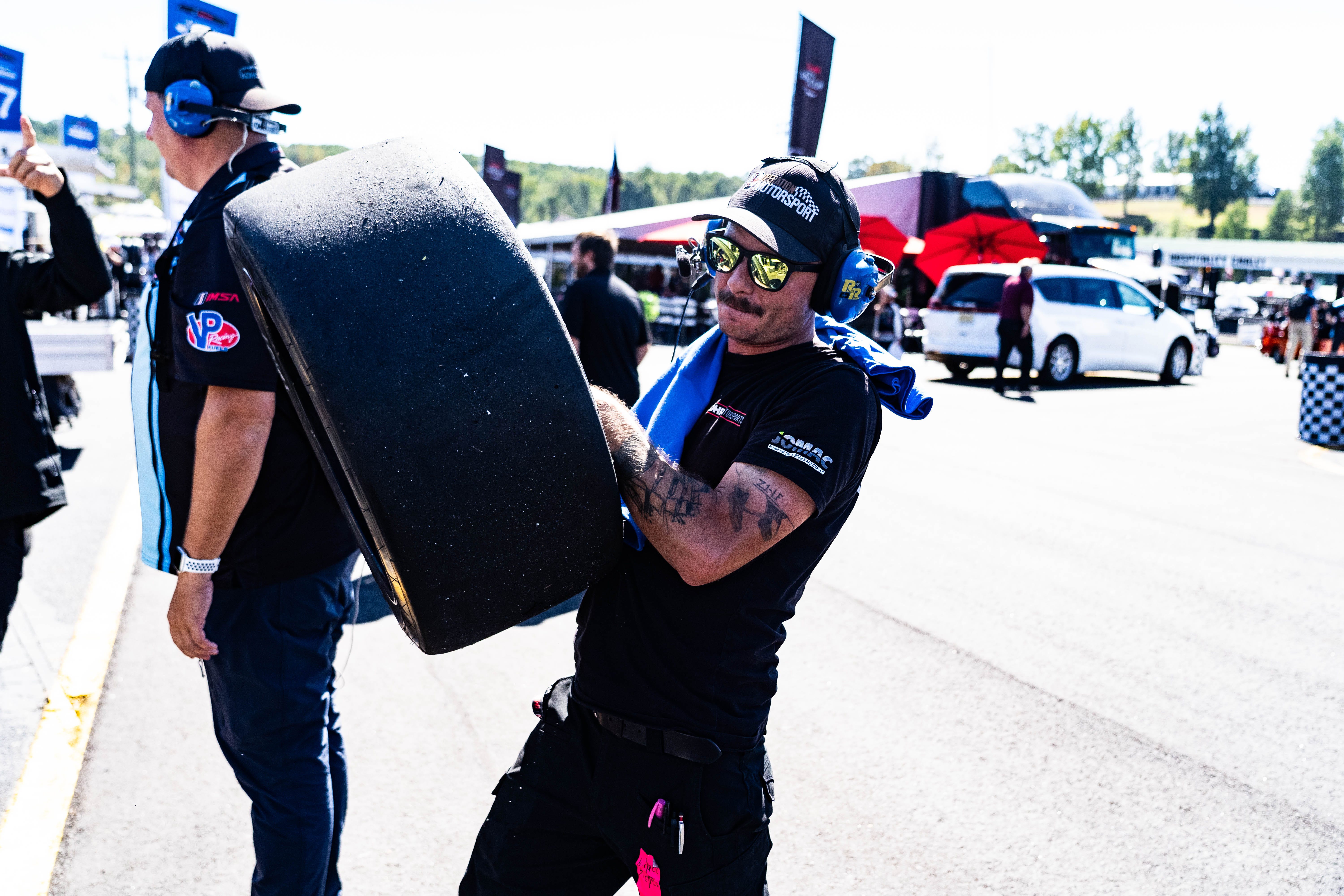
Veterans often find Operation Motorsport through the popular Operation eMotorsport iRacing League in which Operation Motorsport participants, veterans, and active-duty service members compete for prizes in live virtual iRacing races hosted by Apex Racing TV. The program meets veterans and service members where they are – allowing them to connect to a lively community from their own homes. Friends and family can interact, too. Races are broadcast in real-time on Operation Motorsport’s YouTube channel. Participants quickly get to know their fellow racers through in-race chatter and connections on social media. Competition is fierce but participants of all skill levels are welcome.
If veteran participants desire a real-life racing experience, they can apply to the Motorsport Immersion program, in which participants get a hands-on experience embedded with professional motorsport teams in the U.S. and Canada within the IMSA, SRO, and FEL race series. Through the application process, Operation Motorsport staff learn more about the veteran’s background and interests. Those veterans selected are often able to apply and grow their learned skills through opportunities to be a team crew member, or to work in any area supporting motorsports, including hospitality, marketing, PR, and digital media. All programs are funded by donors, so participants incur no financial obligation. In fact, ninety-eight percent of all funds donated by private givers go directly to programs for veterans, while administration costs are generously supplied by corporate partners.
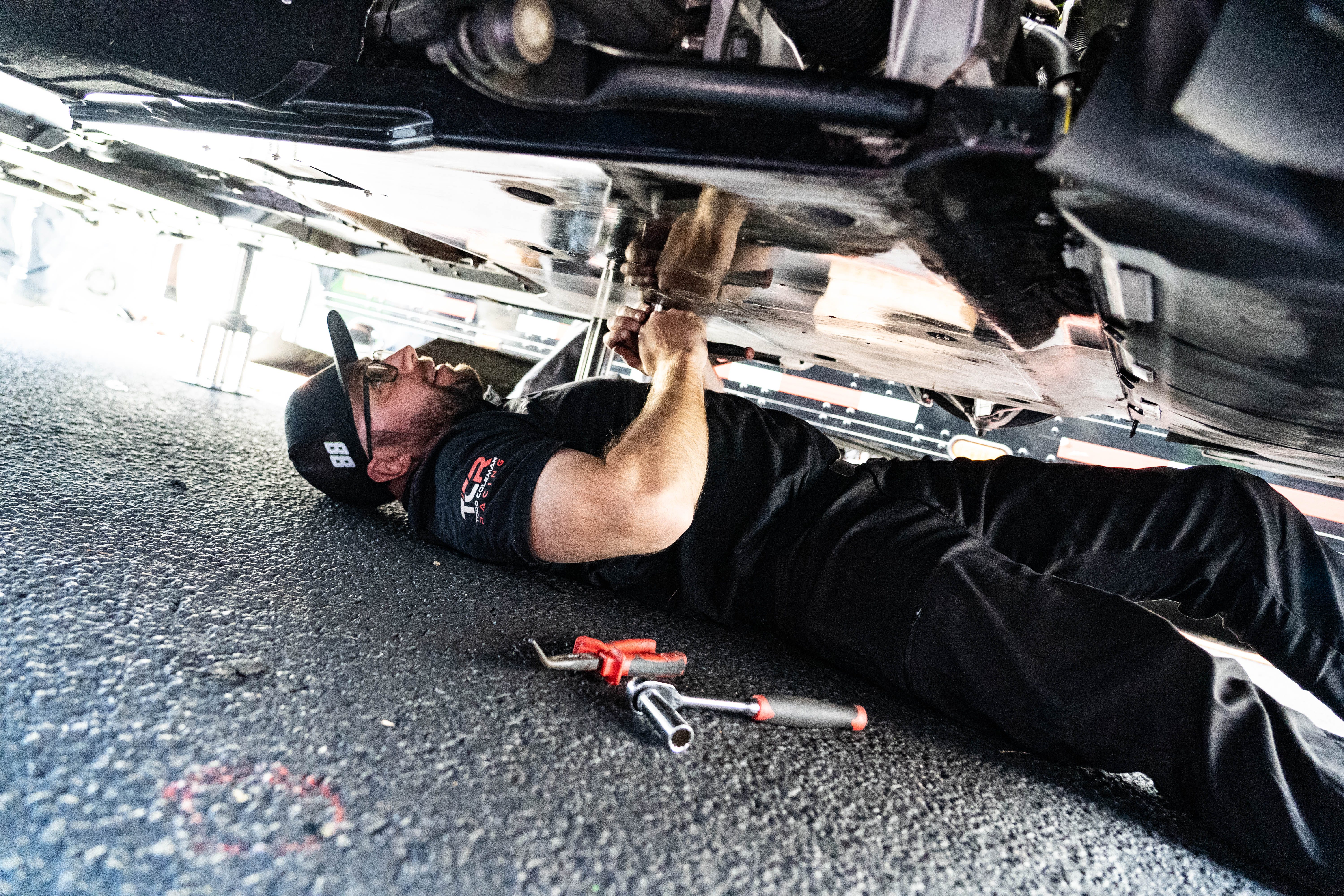
During the 2024 racing season, Purple Heart recipient Richard Davenport, a U.S. Navy (5 years) and U.S. Army veteran (4 years) who was injured in Afghanistan, showcased his talent for photography at IMSA and SRO events. At the end of the year, Davenport said “You all have made the unobtainable obtainable for so many of us and you’ve given me back a community I was sure I’d lost forever.”
While Operation Motorsport’s programming is not intended to replace clinical therapy, some participants find it a nice compliment. Davenport, Yuke, and Dave Bell, a U.S. Marine and Army veteran with a total of 21 years of service including multiple overseas deployments, all traveled to Wales, UK for the Race of Remembrance, an endurance race that features drivers and teams who have served or are serving in the military and is dedicated to that service and those who were lost in service to their countries.
Bell appreciates the community he’s found in his Operation Motorsport family and the opportunity to practice healthy recovery methods he’s learned.
“I gained so much from the (Race of Remembrance) that I don't even know where to begin,” Bell said. “The trip reinforced a lot of work that I've been doing with my therapist. It gave me a safe environment to test new, healthier stress coping mechanisms that I've learned. It gave me an opportunity to honor the brothers and sisters that I've lost as well as the ones that are still here to support me. It was absolutely fantastic.”
In 2025, Operation Motorsport will host the CrowdStrike Veterans Race of Remembrance, Powered by AWS, at VIRginia International Raceway in Alton, VA during Veteran’s Day (U.S.) weekend. The weekend will feature multiple series’, including the Ford Mustang Challenge, and an expo of organizations that support military veterans.
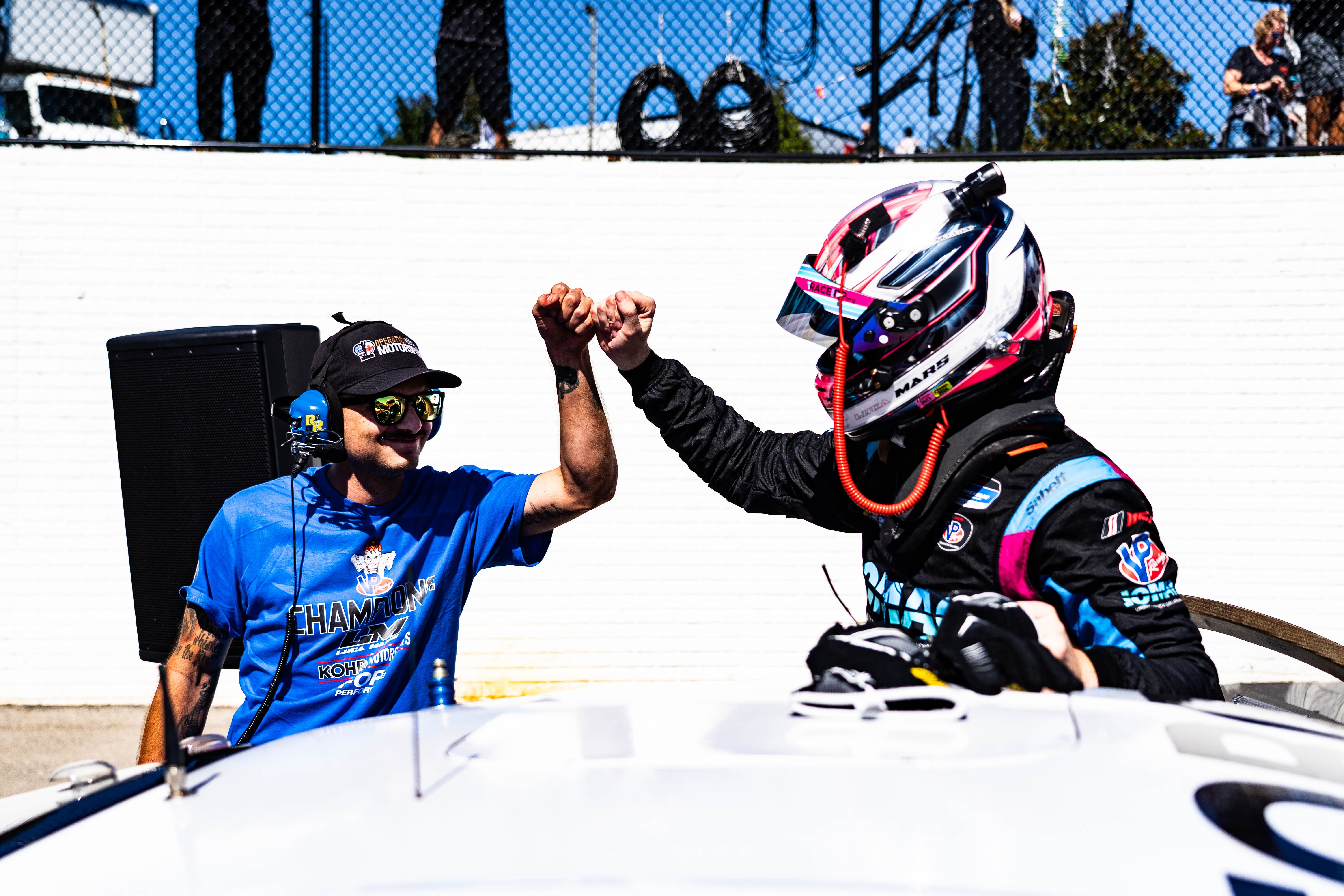
For more information, visit OperationMotorsport.org or check out Operation Motorsport on Facebook, Instagram, and LinkedIn.
Warrior Rising Part 2
Benjamin Bunn
I made a good living in the Army, but while my counterparts communicated their success through opulent vehicles, fancy dinners, and travel, I spent evenings and weekends reading books on business plan creation, financial models for lifestyle businesses, and coaching as many CrossFit classes as I could with hopes of learning as much as possible about the industry before opening the doors to my own gym. I had gone as far as to hang a large whiteboard in my loft apartment where I would constantly scribble ideas, hang reminders, and put bold notices for upcoming deadlines.

The reality of finding a brick-and-mortar location that had the space, parking, and appropriate certificates of occupancy was harsh. I signed a lease on a fifteen-thousand-square-foot facility I knew I couldn't afford, but I was determined to make it work. To make matters worse, I had signed the lease four full months before I exited the Army, taking on additional risk—all on the off chance I might open and run a successful business.
On the weekends, I would drive to Tampa from what was then Fort Benning to open boxes of equipment, install flooring, paint walls, etc. I did much of the work alone, sometimes working well into the night. My sister was a resident advisor at the University of Tampa, and I would frequently crash on the floor of her dorm room at the very college I had attended years earlier. I would wake up early and have breakfast at a local diner called Daily Eats, where I would furiously scribble in my notebook, ideating around t-shirt ideas, branding, and a plethora of other details that didn’t have much to do with running a successful business but consumed me nonetheless.
72 hours after exiting the military, I held the grand opening for my gym. I had wasted no time; however, my expeditious opening had less to do with some grand notion of early bird discipline or some aggrandized ideals about hustle or grind culture, and more to do with the desperate position I had put myself in. I had saved up nearly two hundred thousand dollars over the years—it was my life savings. The day I opened my gym, I had only fifteen thousand dollars left to my name and an additional sixty thousand dollars of debt by way of two eighteen-month zero-interest credit cards. I had no back-up plan.

Most days, I felt completely lost and ashamed. I had a DD-214 that precluded me from reentering service in any capacity and was told that I could no longer lead men with guns. As severance, I was handed a letter from the government stating I was permanently disabled. I remember getting the letter a few weeks after I opened the gym and weeping uncontrollably in my mother’s kitchen, my hands trembling and the tears smearing the official letterhead on the memorandum for record. My mother and then girlfriend struggled to calm me down, not understanding that I was effectively holding the tombstone for my entire Military career in my hands.
Leading up to the grand opening, I went through my phone and sent a text message to every single one of my contacts with the landing page for the event. I didn’t care where they lived or if they did CrossFit—I asked them to come show their support, and if they couldn’t come themselves, I asked them to share the event with friends or family members who might be interested. It was humiliating for me at the time. I felt as if I were begging, and to add insult to injury, several close friends and family members responded tersely with comments like, “I hope you know what you’re doing?” or “No thanks, but good luck, buddy.” I would often think about those responses when I cleaned the floors late on Saturdays while my friends were off at the beach or spending time with their families. I was in my mid-thirties, broke, and the only thing I had to my name was a five-year lease and a DBA that said, “Cigar City CrossFit.”
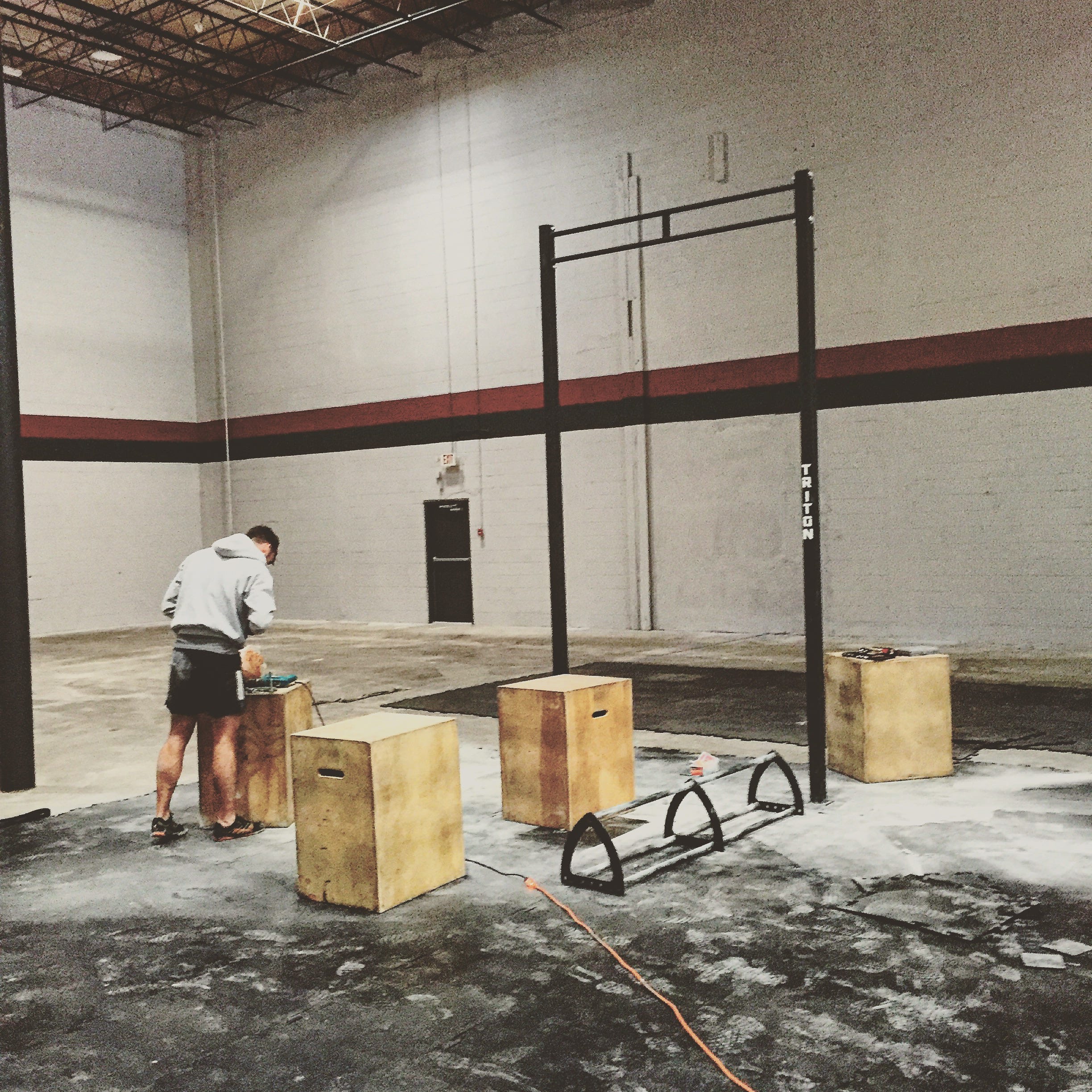
Mere months previously, I was making six figures as a junior officer in the military. In some cases, I was in charge of dozens of men and millions of dollars worth of equipment and sensitive items. Telling people I was an infantry officer was one of the greatest sources of pride in my life. My background in special operations was both rare and difficult—something I had worked my entire life to achieve. Now I was living in my mother’s townhome and coached almost every class in the gym, sometimes staying there 16 hours a day, taking cat naps on a hand-me-down couch we kept in the office.
I had gambled my life savings on an uncertain future. I would spend the last years of my youth struggling to run a lifestyle business based on this thing that I was passionate about, with hopes that where passion and hard work intersected, I might find success. Over time, more and more people started coming to my gym. I hired coaches, and those 16-hour days turned into 12-hour days, then 8-hour days.
Although my journey sounds lonely, I did, in fact, have help. My sister became one of my first coaches, not only lending me a floor to sleep on but also providing a thoughtful and exuberant persona as a coach on my floor. My mother, who was in her mid-sixties at the time, became a staple of the gym—doing her best to support her son, whom she admired deeply despite his ne’er-do-well antics.
Deep down, I still felt less than, but slowly, I started smiling more than I was frowning. The gym had a robust community, and I had successfully recruited several subtenants to fill the large warehouse space. I had moved out of my mother’s house and into a cool studio apartment where I lived with a small mixed-breed rescue puppy I named Jolene, after the popular Dolly Parton song.
When you leave the military, you lose several things: your job, your home, your community, and sometimes your purpose. I was lucky in that when I opened a gym, I had, in fact, found a way to replace all those things. Cigar City CrossFit became synonymous with who I was—an extension of my passion for fitness and philosophy on life. It wasn’t just a job for me but a deep-rooted purpose to make something that was uniquely my own. I missed the military desperately, but I had found a new community at the gym—one that looked to me not only for workouts but also for leadership and guidance. I would find ways to make their dark days bright, and it would fill my cup.
In the military, home can sometimes be as simple as a duffle bag and a tough box—a small collection of belongings that can literally be carried on your back. There was comfort in that for me—to know that I could leave at the drop of a hat and resettle quickly and seamlessly.
But it was occurring to me that I had unpacked my duffel bag for the last time.
I was starting to accumulate things that couldn’t be carried on my back but would be carried in my heart for the rest of my life.
I realized I had finally come back home.
Health and Fitness
Guidance for improving physical and mental performance, nutrition, and sleep.
Training for Special Operations Selection, Part 2: Mental
Building The Elite - Craig Weller & Jonathon Pope
This is the second of a three-part series where we’ll talk about the physical, mental, and emotional factors for success in SOF selection. If you missed the first piece, you can read it here.
The mind drives the body. This much becomes obvious if you’ve been through or observed a SOF selection course. While people fixate on the physical challenges and incredible fitness of successful special operations candidates, there is a deeper process at work: Once candidates have met minimum physical standards, the physical torment is just a way of seeing into a candidate’s mind.
SOF selection courses aren't looking for people who make it through without suffering. That doesn't happen. They're looking for the people who suffer well. They seek to identify the rare few people who can still move forward and do the right thing when they’ve got nothing left.
Virtues mean little when they’re convenient. Somebody might seem like a good teammate, capable of maintaining their composure, or good at paying attention to details, but you don’t really know if that’s true (nor does the individual) until it’s been tested under stress. Can you still do the right thing when it’s the hardest thing to do? That’s the only time when it matters.
A lot of the most common advice for succeeding in SOF selection is at once true and unhelpful. For instance, “Just don’t quit.” Yes, that’s an important part of the process, and certain moments in most selection courses will come down to little more than that. But the question remains: How?
“Just don’t quit” is an outcome. It’s as helpful to a SOF candidate as telling a track athlete that the secret to winning is to run faster than everybody else. If you can’t also describe a learnable process that facilitates that outcome, it’s a useless statement.
As we described in our first article, success in a SOF selection course requires the complex interplay of physical, mental, and emotional factors. All the pieces matter, and they all influence one another. Physical training is one of the best places to develop mental and emotional skills, and these skills, in turn, enable the full expression of one’s physical potential.
The mental skills that help a SOF candidate succeed in the toughest training courses in the world are knowable, explicit processes. Our clients practice them daily. You can too.
Segmenting
The first, and often the single most valuable skill that our clients rely on during their courses is segmenting.
Segmenting is the process of breaking your mental world down into small, manageable pieces. If you’re a BUD/S student in first phase, you don’t think about how you’ll handle the next six months. The mental weight of that will crush you. Instead, you focus your mind on the small chunk of time immediately in front of you that you can control.
This is often broken down by meals. You make it to breakfast, then you make it to lunch, then you make it to dinner. In the harder moments, even meals can seem too far away, so you narrow your focus even more. You get through the next set of pushups, or you carry the log to the clump of seaweed a few dozen yards ahead of you. You may have no idea how you could possibly make it through six more months of this, but you know that you can do three more overhead presses with the log. Moment by moment, that’s all you will you ever need.
Mindfulness
Segmenting, while the most commonly relied upon skill for most candidates in selection, is not immediately accessible without another, more upstream skill: Mindfulness.
Mindfulness refers to observing our stream of consciousness or mental environment. It's a form of concentration where we actively attend to our internal and external experiences without reaction.
Mindfulness must precede any other mental skill because all of these skills rely on our ability to consciously focus our attention. To change our internal experience, we must learn how to focus our minds.
We can only change what we pay attention to. And, most of the time, we are on autopilot. This isn't necessarily a bad thing. But, we must be able to attune to our internal life for more than a handful of seconds if we want to change our automatic, default responses.
Like any skill, it needs to be intentionally developed.
Meditation is the most common practice for developing mindfulness. And while it is a powerful modality, it's not the only or best strategy for everyone. Some people are crunched for time or struggle to sit still and maintain their attention.
Training, doing the dishes, or even walking your dog are opportunities for developing mindfulness. Anytime you can safely focus on your internal experience is an opportunity. The goal of mindfulness practice is two-fold:
1 - Learn the nature of your mind - the thoughts, emotions, beliefs, and other sensations & how you respond to them in different situations.
2 - Strengthen your capacity to skillfully direct your attention.
We can use attention to shape the texture of our experience and, thus, what we learn & reinforce, shaping the trajectory of the person we will be tomorrow.
This is why we have all clients focus on developing this skill first, before moving on to other aspects of mental/emotional skill development.
Compartmentalization
There is a distinction between pain and suffering. We can be in pain without suffering, and we can suffer without being in pain.
Much of what a successful SOF candidate is learning during their course comes down to experiencing extreme physical discomfort - being in pain - without suffering.
Pain and fatigue are surprisingly malleable phenomena, more akin to complex emotions than simple signals relaying a physiological reality of depletion or damage. This means that they’re highly sensitive to our expectations and the focus of our attention.
Compartmentalization is the practice of mentally setting things aside that are unnecessary or counterproductive to your immediate purpose. It’s embracing hurt without feeling harmed.
This does not mean passive avoidance. As the psychologist Steven Hayes said, “If you cannot open up to discomfort without suppression, it becomes impossible to face difficult problems in a healthy way.”
Effective compartmentalization doesn’t mean coping with problems by ignoring them. It means that you have an understanding of what matters most right now and what can either work itself out or be dealt with later.
Self-Talk
Thoughts make feelings, and what happens in our minds affects what happens in our bloodstreams.
The stress response shaped by the running dialogue in our minds has a real physiological impact on everything from our heart rate and oxygen consumption to the types and amounts of stress hormones pumping through our bodies.
What we say to ourselves often has much more impact on our performance and abilities than anything the outside world can throw at us. Learning to monitor and manage our self-talk helps us to consciously regulate our nervous systems and stress responses - shaping them into tools that enable us to take on the world, rather than forces of our own destruction and making.
A first step in this process is recognizing that your identity is not the same thing as passing instances of self-talk, or fleeting emotions.
In other words, you are not your thoughts and feelings.
But separating your thoughts, feelings, and actions requires practice.
We all have patterns - thoughts that lead to feelings that lead to actions. Identifying and interrupting these patterns allows us to grow and become more capable.
The first step, identifying - requires the ability to tune into our internal monologue, thoughts and feelings without turning away.
When you work on changing patterns, approaching this work with curiosity and self-compassion is the most effective perspective for growth.
Engaging in this process with curiosity is helpful because it reduces our tendency to pass judgment on ourselves for our thoughts. Instead, we can analyze our thoughts and feelings like scientists exploring their research subjects - open to any and everything.
Self-compassion isn't letting yourself off the hook or wallowing in self-flagellation. Self-compassion is holding yourself accountable with the understanding that you will not be perfect. Knowing that the only thing that is required is your best effort. Accepting that you'll make mistakes but learn from them without letting them cascade to more setbacks.
Thoughts and feelings come and go - they aren't you unless you decide they are. You also don't have to ignore them. There is a time and place for compartmentalization (intentionally setting aside feelings and thoughts). When you're learning about yourself and looking to change ingrained patterns, you don't have to do anything more than acknowledge and experience without changing your actions, the same way you notice the weather, grab a coat or sunscreen, and move on with your day.
The better you get at identifying patterns, the easier it is to use other strategies in the future to interrupt, challenge, and adjust. Often, just not reinforcing a thought-feeling-action feedback loop is enough to loosen its grasp over you and allow you to take a different path.
Knowledge is only useful when it informs behavior
None of these concepts can only help you if you integrate them into your daily life and use them to shape your experiences. All the knowledge in the world is meaningless if it's not integrated through experience and reflection.
To get better at these skills, you must practice them. Start with mindfulness, because it opens the door to everything else. Changing your inner world requires conscious awareness and regulation of your attention, and that in itself is a very difficult skill. So, put some time into that.
Notice where your mind goes during the day, on your commute to work, during your training sessions, when you’re getting a haircut. Be curious, and once you’re able to monitor where the spotlight of your attention is going, practice moving it around and controlling where it goes.
Once you’ve gotten some experience there (our clients work on this daily for about a month before adding anything else), start working on integrating other skills into your daily life.
Keep your focus on daily action and building a growing body of wisdom from consistent practices. By stacking these small forms of daily practice one after another, day by day, you build a foundation of wisdom. Wisdom is knowledge on the other side of experience. It’s what enables you to have the mental tools that you need in your toughest moments, whether in a SOF selection course or navigating any other part of life.
——————————
This ends Volume 31, Edition 1, of the Lethal Minds Journal (01FEBRUARY2025)
The window is now open for Lethal Minds’ thirty second volume, releasing March 01, 2025.
All art and picture submissions are due as PDFs or JPEG files to our email by midnight on 20 FEBRUARY 2025.
All written submissions are due as 12 point font, double spaced, Word documents to our email by midnight on 20 FEBRUARY 2025.
lethalmindsjournal.submissions@gmail.com
Special thanks to the volunteers and team that made this journal possible: