

Resilience: Warriors Rise
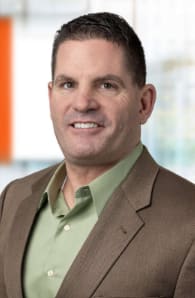
Chip Daniels is a retired US Army officer and the President of the 1-5 Cav Black Knight Foundation. He and fellow vets are working to increase awareness about the cost of war. You can help.
Who are the Black Knights, and what is the 1-5 Cavalry Foundation?
Black Knights is the name of the soldiers of 1st Battalion, 5th Cavalry Regiment. The battalion is part of the 1st Cavalry Division based at Fort Hood, TX. The 1-5 Cav Black Knight Foundation was established in May 2025. Our purpose is to turn trauma into growth by focusing on the well-being of veterans and their families.
What inspired the creation of Resilience: Warriors Rise? Why tell this story now?
We lost 18 soldiers during the OIF 06-08 deployment, but have lost at least 33 since our return in 2008. Most of those deaths have been by suicide. That is over 50 fathers/sons/brothers gone! We believe that we need to produce this documentary to tell the story of the great success that the unit had and how that success changed the strategic situation in Iraq for the entire war effort. While the cost was high in both US and Iraqi lives, we ultimately saved countless lives by stopping Al Qaeda’s campaign of violence.
How did the partnership between Amelio Media, Humanity Pictures, and the 1-5 Cav Foundation come together?
A former lieutenant in the battalion, Mike Meyers II, had a relationship with Amelio Media and Humanity Pictures through his work with the Military Basketball Association. They had completed a documentary for the MBA, and after filming, Nicole and David asked Mike where his passion for helping veterans came from. He began to tell them the story of 1-5 Cav’s OIF 06-08 deployment. Mike connected Nicole and David with us, and we decided to complete this project.
What do you hope viewers will take away from this series—civilians and service members alike?
We want the soldiers who were there to understand that we won - they made a monumental difference. We want their family members, who are often paying their own price due to the trooper’s PTSD, moral injury, depression, etc., to know where it all comes from. I don’t think it is possible to perfectly illustrate the horrors of combat to someone who hasn’t experienced it. But perhaps this documentary will give some perspective and lead to healthy conversations.
For civilians, we also want them to know what THEIR soldiers did to help the people of Baghdad and Iraq during a terrible time. We also want them to know how many of those soldiers are now very involved in helping their peers grow and lead healthy lives. They demonstrate resilience every day.
The series explores complex topics like PTSD, moral injury, and reintegration. Were these difficult topics to approach for you or the interviewees, and how did you navigate the sensitivity and necessity of the exploration?
We are leading by example. I openly discuss my own journey and how I eventually realized, after several years, that I needed professional help. There was a real cost to my family because I was so negative, pessimistic, cynical, and angry all the time. My young children could not understand why. My wife finally presented me with an ultimatum - get help or you will do irreparable harm to the relationships you value the most. I began to search for a therapist, but I specifically wanted a man who also had experienced combat. That was a tall order, and it took me several months to find one. The therapy changed my life and helped me realize consciously what I had been doing subconsciously.
At our latest filming session, we invited a former captain from our unit who was instrumental in our success. There were three of us (the former commander, XO, and Ops officer) who had not seen him in years. We were enjoying a reunion dinner on the first night, and the topic turned to mental health. I noticed that he was agitated and, well, triggered. I asked him if he was OK, and he just blurted out that several years ago, he had a loaded pistol in his mouth and was ready to pull the trigger. His dog saved his life. This guy is 6’5” and a ripped 240lbs. He is the epitome of a tough guy. We were floored, and he shared his story in his interview. If it happened to him, how many of our other soldiers experienced this? We need to communicate that they are not alone!
Why was the Battle of Ameriyah chosen as the focal point for Season 1? What makes it historically and emotionally significant?
The Battle of Ameriyah was significant because it was in Ameriyah where the first Iraqis rose up against Al Qaeda and other radical jihadists. These were men who were opposing us and even fighting against us at some points. Over time, they realized that the Americans were not their greatest threat - it was Al Qaeda in Iraq (AQI). So, in a very dynamic way, they partnered with us to defeat AQI, and it worked. GEN Petraeus then used this model across the rest of Iraq to defeat AQI and reduce the violence dramatically. In his interview, he states that the battalion helped win the war and made history. It was hard but not hopeless.
But again, the cost was high…and we are still paying it. The man who led those Iraqi fighters against AQI has paid the heaviest price. We reunited with him after 18 years when we met him in Canada to film and interview him. It was quite emotional, and you will see this on film. I realized that he needs as much help as our soldiers do, maybe more.
What was the most challenging part of producing this series, either logistically or emotionally?
Every time I think I have processed this “enough”, I learn that I am wrong. In December 2024, we traveled to Fort Hood and did the first round of filming at the battalion headquarters. I saw many men I hadn’t seen in years - it was a great reunion. I got back to my hotel room and called my wife, planning to tell her all about it. When I heard her voice, I just broke down and couldn’t speak. As I stood there silently, she just said, “I knew you had to go do this. You are doing the right thing for all of you.” Every film session and reunion is similar. Tough but necessary.
Logistically, none of us (the 1-5 veterans) knew anything about creating a documentary. We have learned everything after the fact, and I often comment that we are always swinging behind the pitch. We’d do it differently if we started all over, but we have made it work so far. Without a doubt, however, raising funds to complete the project has been the toughest part. We could “sell” the story to a streaming service and consequently hand over the rights for production and marketing. We deliberately chose not to do that so we can ensure that the final product tells the story in a way that is accurate and honors the sacrifice of so many.
Looking back, was there anything unexpected that shifted the direction of the series? Or anything you wish you’d had more time or space to explore?
We thought this was one simple documentary. After the first round of filming, David Goodman, who heads Humanity Pictures, told us that this was a series. The story is too big. That obviously changed the approach and the overall cost significantly. We wish we had fully understood this world before we started the project. We would structure things differently, but we are making it work.
What does resilience look like in the lives of these veterans now? How are they continuing to rise?
I find it very interesting that many of our veterans have formed their own non-profits to help other veterans. Why is it that those who gave the most continue to be the ones who still give the most? Our former chaplain leads Warriors On The Way. One former lieutenant is very involved with Carry The Load. Mike leads the MBA that I mentioned earlier.
A former junior enlisted cook started a Facebook page years ago to offer support to his fellow comrades. That turned into the primary method we used to stay connected. Unfortunately, it is also why we know that we have lost at least 33 troopers since that deployment - guys write about it and notify the group. That said, they also encourage and assist each other in tangible ways.
How can viewers or supporters get involved with the foundation or help amplify this project?
First, we need donations to complete it. (Click here to donate.) We would also appreciate posting about it on social media to drive interest.
When and where can people watch Resilience: Warriors Rise?
We are targeting summer 2026 for completion and are still looking for the final streaming platform.
What’s next for the series—and for the foundation?
We are officially in post-production now, and we will start putting together the first episode very soon. We are reviewing the transcripts of all interviews and working as a team to align comments with the overall themes of the film. As the foundation generates funds, we will use them to host a screening of the film for our veterans and their families. We will also use funds to support the other non-profits that our veterans have started.
Donate here.
Chip Daniels is a retired U.S. Army officer and seasoned government affairs
executive whose career has spanned combat deployments in Iraq and
Afghanistan, strategic defense leadership, and high-impact federal
engagement. His last role in uniform was as the Division Chief, Programs Division, in the Army’s Office of the Chief Legislative Liaison. In this capacity, he liaised with various Congressional committees to secure authorities and funding for the Army. He also served as the Chief of Staff for U.S. Forces Afghanistan, where he led a 730-person team and managed a $3.4 billion operating budget supporting over 13,000 service members. He served in multiple roles on the Joint Staff in the Pentagon and commanded combat arms units at multiple levels over a 28-year career.

In industry, Chip was the Vice President for Strategy & Transformation, as well as VP of Government Affairs at SolarWinds, an industry-leading IT software company. Chip and his team were responsible for monitoring and assessing the legislative and regulatory environments, liaising with U.S. federal administration and policy thought leaders.

Chip serves as President of the 1-5 Cav Black Knight Foundation, a nonprofit formed in May 2025 to help veterans turn trauma into growth. The foundation focuses on programs that enhance the well-being of veterans and service members, fostering resilience, and a sense of belonging. The foundation is producing a documentary that captures the unit’s sacrifice and resilience both during and after its historic deployment to Baghdad from 2006-08.

Chip holds a B.S. from Virginia Tech, an MBA from Duke University, and a Masters of Strategic Studies from the U.S. Army War College. Chip and his wife Lisa have three children and reside in Fairfax Station, VA.
Dedicated to those who serve, those who have served, and those who paid the final price for their country.
——————————
Special thanks to the volunteers and team that made this journal possible.